

Poverty as Inheritance.
A cycle engineered and maintained by the systems around us.
My primary school teachers made it a point to tell us that if we didn’t wake up early and work hard, we’d be forced to do so in adulthood. I woke up early. I worked hard. I’m pursuing my master’s now, yet I work a minimum‑wage job to pay my bills and fees, I take no offence. I start at 5 in the morning and finish at 8. Break, then resume at 5 in the evening and finish at 8. It’s the only job an immigrant can easily get. I don’t have the luxury to be picky. I earn just enough to stay afloat, yet some of my colleagues have families, and I cannot help but wonder how they keep it all together.
Poverty is a place you get born into, a place you keep discovering new floors in. You think you’re at the bottom, then you realise there’s a basement, then a darker room under the basement, that you call home. It takes and takes even when you're already at a negative. And even when you do notice, you’re too busy surviving to care.
It starts with food as always. You know it’s cheaper to buy a sack of maize or rice. Everyone knows this. But when you’re living hand to mouth, you buy what you can carry home that evening. Five kilos of maize flour every week for a family of five. Five hundred shillings(4$) gone. By the end of the year, you’ve spent twenty four thousand. Two ninety‑kilo sacks cost ten thousand(80$). You could have saved half your money if you had the luxury of having money. Poverty makes you pay more for everything. Sugar, rice, beans, cooking oil, all of it.
It comes with a dash of shame too. You walk into a shop and buy one kilo of sugar because that’s what you can afford. You pretend you prefer it that way, that you don’t know the math.
Then it moves to the things that feel small. A phone on monthly installments looks manageable. You don’t realise you’re paying more than the phone is worth. You don’t know refurbished phones exist, or you think they’re for people who have failed at life. Poverty teaches you that being the first owner of something is a kind of respectability. If everyone in Kenya could afford second‑hand cars, you’d still find people burning themselves out just to be first owners.
Health is where poverty starts to really sting. Insurance costs more in low income countries because hospitals are businesses. If every two months you’re likely to get amoeba, get hit by a motorbike, or be injured by your cow, your premiums rise. Most people simply don’t buy insurance. So you live uninsured. You skip annual checkups because you don’t have the time or the money for consultation, screening, imaging, labs, medication. You raw dog life and hope today’s fever isn’t the one that ruins you. You pray the stomach ache goes away. You tolerate pain for years because you can only afford one doctor’s visit, and if nothing is found, you can’t afford a second or third opinion. You cannot afford more poking and probing. The cost is advanced illness and six‑figure bills.
Education becomes a negotiation. Kids finish high school and step straight into work. A degree is nice, but eating is urgent. Minimum wage keeps you alive but never lets you leave. You tell yourself you’ll study later when things improve. They rarely do... nothing really gets better.
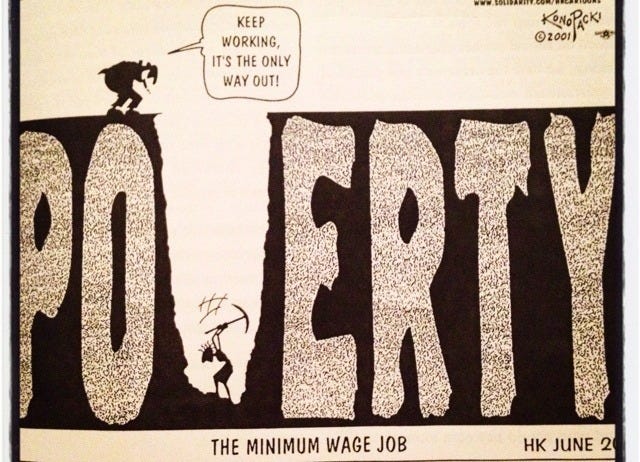
Girls marry young. Sometimes because their families can’t feed them. Sometimes because they themselves can’t keep labouring for free while going hungry. She hopes the man will provide food and shelter. He hopes she will bring comfort to the struggle. Neither gets what they hoped for. Children arrive. The cycle continues.
Schools fail. Teachers give up. Illiteracy grows. Conversations revolve around denial, tribalism, xenophobia and whatever the political class feeds you. They show up during campaign season with alcohol and two kilos of sugar and tell you your neighbour is a witch, benefits off your hard work and wants to steal your job and wife. You believe it.
If they built quality schools, paid teachers better, subsidised food, funded bursaries and programs that get you to job markets, you’d be empowered enough to choose better leaders. Except they cannot risk that.
Poverty eats time. You spend days going to job interviews that lead nowhere. You spend money on fare you can’t spare. You lose your health to anxiety. You starve and get vitamin deficiency. Your hair thins, your skin grows dull, you develop imposter syndrome and drown in depression.
You lose years to survival. All by birth.
All by birth. That’s the part people with privilege rarely understand. None of these stories begin with a choice. They begin with a place, a family, a village, a school, a hospital, a moment in time you didn’t control. Privilege is simply growing up in a life where these stories are not the backdrop.
It’s buying food in bulk without thinking twice. It’s replacing a phone because a new version came out, not because the installment plan finally ended or because someone stole it. It’s going to the doctor at the first sign of pain and expecting answers. It’s choosing school because survival is already guaranteed. It’s marrying for love because hunger isn’t part of the equation. It’s living in a place where leaders cannot buy your vote with alcohol and two kilos of sugar.
Privilege is not wealth. It’s the invisible freedom of moving through life without constantly negotiating your existence.
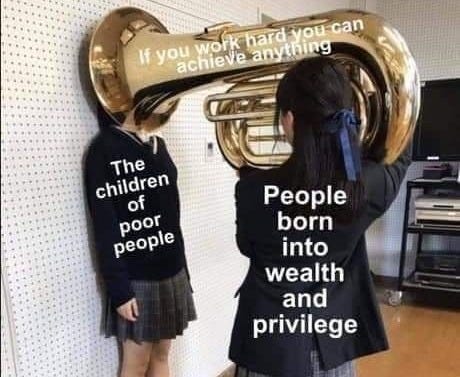
People need to see this, especially with the rubbish podcasts in Kenya spreading nonsense about ‘abundance mindsets’. Systemic issues should never be ignored
I've been meaning to buy something. It costs twice my rent, but it's something I've wanted for a long time. I always tell myself I'll get it, then life happens and the money finds another purpose.
I even have the extra money sitting there, but I just can't bring myself to spend it. It feels selfish, almost careless, to spend that much on one item when there are children in Gaza wishing for bread. A friend told me it's a scarcity mindset. Maybe it is. But what if I wake up the next day and need that money more than I need this trifling thing?