

Rethinking African Poverty Beyond Western Constructs.
Questioning how wealth and poverty are defined and measured.

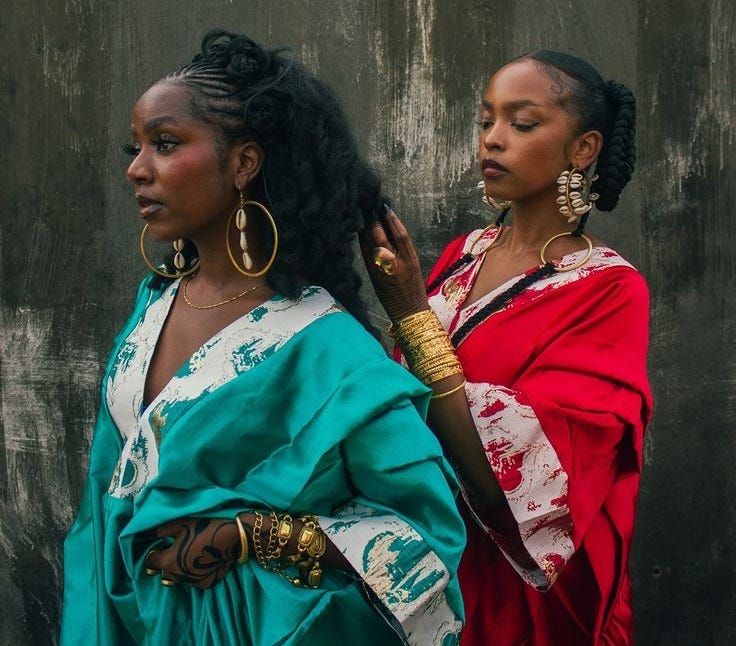
Africa is poor. I hear it every time. I feel it too in the pitying stares of my French colleagues when I speak of going back home and in the questions my students ask when I present Kenya to them. Lower class, middle class, upper class, where do we really fall? Statistically, I should not be this educated, able to speak for myself, dress the way I do, or even know what I know.
These standards are shaped by a narrow and westernised understanding of wealth, one that reduces societies to statistics and stereotypes. Mansa Musa, in Western narratives, is often described as the richest man in history, although historians debate how wealth should be understood in that context. His wealth reflected the prosperity of the Mali Empire and was tied to stewardship of collective resources rather than private accumulation. This concept can be difficult to grasp from a Westernised perspective. In pre-colonial Africa, wealth was embedded in community networks, trade systems, and social structures.
Theoretically, I am poor, but realistically and socially, I have never felt poor. My life has been rich in ways that GDP cannot measure: community, joy, belonging, access to homegrown food, and community-based support systems, though this fabric is slowly withering away.
It is often stated that the majority of Africans are lower class. By capitalist and Western standards, this appears true. However, these classifications are themselves shaped by Western models of development. In France, the concepts of sharing and community exist largely through taxation. There is housing aid for those earning below the minimum wage, free primary and secondary education, and quality healthcare through social and complementary health insurance. All of this is reflected heavily on the payslip. Nearly a quarter of my income is taxed. These contributions support the unemployed, children in foster care, the elderly in care homes, housing assistance, garbage collection, and city maintenance.
The African model is similar in spirit but different in execution. Relatives look after their own, food is shared, neighbours check in on each other, and unpaid medical bills are often covered through voluntary community contributions. Older people remain close to family, and despite high unemployment, friends host friends and families host families. We grow up with aunties, cousins, and close friends who eventually move out when they find their footing and pass the support forward.
In most parts of Kenya, life is communal. Outside urban areas, homelessness is less visible because communities often absorb those in need. Many people cultivate and consume what they grow, living in simple structures built from cement, iron sheets, timber, or mud. Meals are modest, with meat, fish, or chicken enjoyed occasionally. However, the narrative is not uniform. In extreme arid regions where rain is scarce, survival is far more precarious. To a Kenyan farmer in a lush green village, often labelled “poor” by the West, the individual in the arid north represents a more tangible and immediate experience of poverty.
If we were to adopt the eugenics narrative that poor people should not give birth, African countries could face a labour crisis within fifty years. There would be many elderly people in retirement, or deceased given mortality rates, and too few young individuals to work or provide care. In another hundred years, there might be no need for colonisation. The remaining global elite could simply partake in the continent’s resources for both economic and social reasons. Why remain in four-season Europe when one could move to Nairobi, Kigali or Kampala, with their moderate climates, lower population pressure, and high investment potential?
Decolonisation and dewesternisation require new approaches that acknowledge the diversity of lived experiences across the continent. Yet this communal fabric is gradually eroding. Homelessness in Nairobi increases each year, with many street children fleeing mistreatment at home. Society is becoming more individualised. “I do not stay with relatives,” I hear often during phone calls. I know marriages that are strained because one partner wished to host relatives while the other preferred to live only with their children and even felt compelled to lock the fridge when leaving a guest at home. Personally, I have been hosted by friends more often than by relatives, but perhaps that distinction is unnecessary. After all, friends are family, aren’t they?
With that being said, Africa is not free from precarious living. That reality exists and calls for serious attention and practical measures. But reducing an entire continent to a single narrative of lack does more harm than good. It strips away context, history, and the structures that sustained people long before modern Western economic models existed.
We are not starting from nothing. We have always had systems that worked. Sometimes strained and imperfect, but systems that functioned nonetheless.
The goal is not to romanticise the past or deny present challenges, but to recognise that what already exists has value. We do not need to build our futures solely on borrowed frameworks from systems that often continue to extract value from us. Instead, we can shape systems that reflect our realities.
Because perhaps the question is not whether Africans are poor, but whether we have been conditioned to see wealth as anything that resembles Westernisation.
Part II:
Rethinking African Poverty. Part II

In my previous piece on rethinking poverty in Africa and its perception by the West, I questioned how poverty is defined. But that is only part of the story. While some forms of wealth go unrecognised because they are not well understood in Western frameworks, the cost of poverty is still deeply felt at home. It is felt in families, in daily survival, …
Other articles by the author:
The Longest 48 Hours of My Life: Budgeting vs Convenience

Air travel is not glorious. So many things can go wrong. The plane to Cairo took off with an hour’s delay. By the time we got to Cairo, we only had 30 minutes to connect to our Paris flight. We sprinted through the airport, asking Arabic-speaking Egyptians how to get to our gate, but they just stared and uttered a few words we could not understand. Lang…
100,000 Shillings and a Dream. Part I

What is life abroad like in your early twenties? Well, it's something I wish everyone could experience, whether you're labeled an immigrant or an expat.
https://anuschkavanwyk.substack.com/p/postcards-privilege-and-the-price?utm_source=share&utm_medium=android&r=7d0oaq
I leaped when I saw the title. And truly it is paramount to define success individually, not performing for anyone whatsoever. But also critic failing systems and adapt to improve them in their unique context, and not just sticking and benchmarking western standards! So nerve wrecking!